 (+035) 527-1710-70
 google@gmail.com
 Choose an address


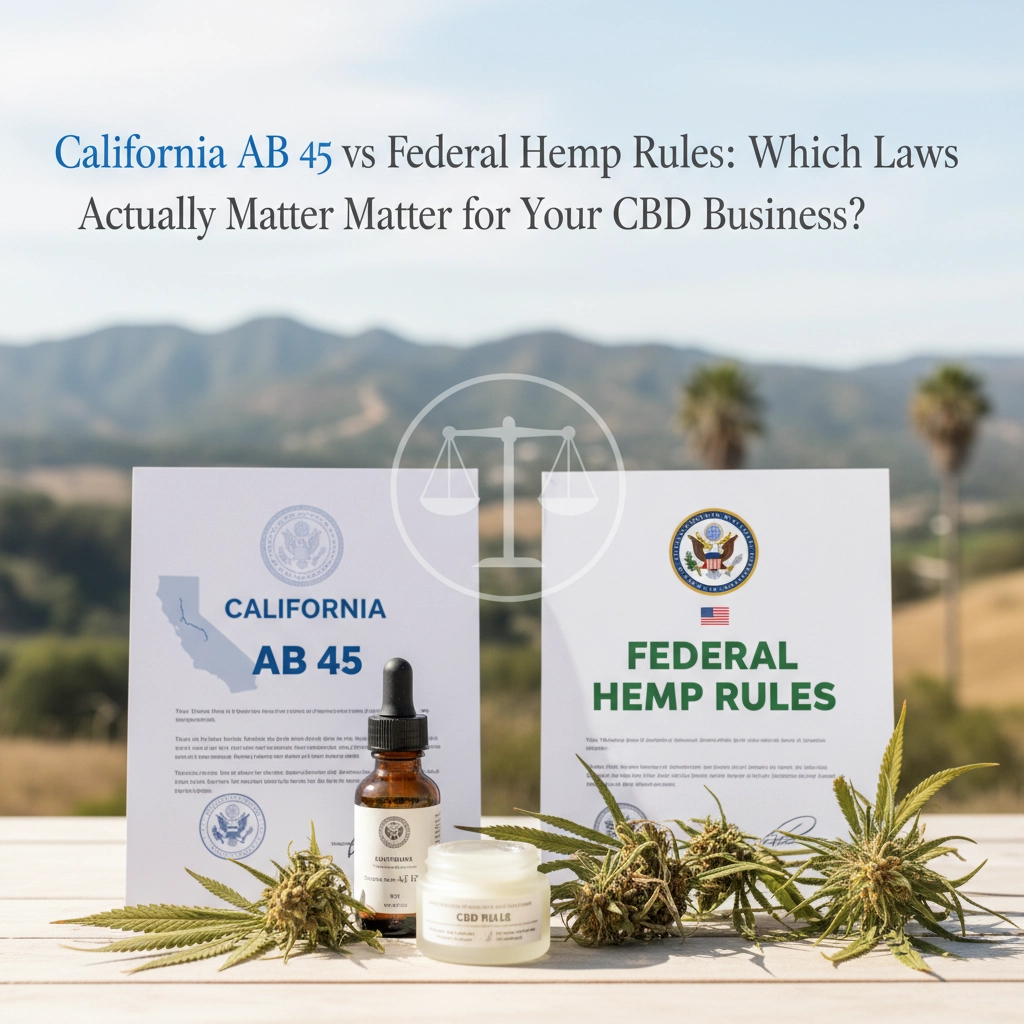
Running a CBD business in California means navigating two sets of rules that don't always play nice together. While federal hemp laws set the foundation, California's AB 45 throws some curveballs that can make or break your compliance strategy. Let's break down what actually matters for your business and where you need to focus your attention.
Understanding California AB 45: The Stricter Sibling
California's AB 45, signed into law by Governor Newsom in October 2021, takes federal hemp regulations and cranks up the restrictions. This isn't just a minor tweak: it's a comprehensive overhaul that affects everything from THC limits to how you can manufacture your products.
Enhanced THC Restrictions Go Beyond Delta-9
While federal law focuses primarily on delta-9 THC at 0.3% or less, AB 45 casts a much wider net. California limits all THC variants: including delta-8 THC, delta-10 THC, and even THC acid: to that same 0.3% threshold. This means products that might be federally compliant could still violate California law if they contain elevated levels of these other cannabinoids.

Think of it this way: federal law looks at one specific type of THC, while California examines the entire THC family. If you're manufacturing products with delta-8 or other THC variants that push total THC content above 0.3%, you're out of compliance in California, regardless of federal status.
Manufacturing Restrictions That Change Everything
AB 45 explicitly prohibits synthetically derived cannabinoids and bans the use of THC isolates as added ingredients. This is a big deal for manufacturers who rely on these processes to create consistent, potent products. The law essentially forces manufacturers to work with naturally occurring cannabinoids only, which can impact both product development and cost structures.
Mandatory Registration and Oversight
Unlike federal requirements, California mandates that all manufacturers producing raw hemp extract or final form products register with the California Department of Public Health (CDPH). This isn't just paperwork: it's an ongoing compliance relationship that includes potential inspections, reporting requirements, and fees through the Industrial Hemp Enrollment and Oversight Fund.
Federal Hemp Framework: Your Starting Point
The 2018 Farm Bill established the baseline for hemp legality across the United States. Under federal law, industrial hemp must contain no more than 0.3% delta-9 THC on a dry weight basis. This definition opened the door for hemp-derived CBD products but left many details to individual states.

Federal regulations require hemp to be sourced from USDA-approved programs, and California's regulatory plan received USDA approval effective January 1, 2022. This means all California hemp cultivators must comply with both state and federal requirements, plus any applicable local restrictions.
However, the FDA still prohibits CBD-infused products from interstate commerce, creating a regulatory gap that states like California fill with their own frameworks. This patchwork approach means understanding both levels of regulation is crucial for business success.
The Real-World Compliance Comparison
Here's where the rubber meets the road. California's approach differs significantly from federal standards in several key areas:
THC Testing Requirements: Federal law requires testing for delta-9 THC only, while California requires comprehensive testing for all THC variants. This means more extensive (and expensive) testing protocols for California businesses.
Product Categories: Federal law allows various hemp-derived products with some FDA restrictions, while AB 45 maintains specific prohibitions on incorporating industrial hemp into medical devices, prescription drugs, tobacco products, nicotine products, and alcoholic beverages. Additionally, inhalable and smokable hemp products face a temporary ban in California.
Synthetic Cannabinoids: Federal regulations don't explicitly address synthetically derived cannabinoids, leaving room for interpretation. California eliminates this gray area by explicitly banning them.

Which Laws Actually Control Your Business?
For CBD businesses operating in California, the answer is straightforward: California AB 45 requirements supersede federal minimums in every category where they conflict. State law doesn't replace federal law: it adds layers on top of it.
This means you need dual compliance. Your hemp must still come from USDA-approved sources (federal requirement), but your final products must meet California's stricter THC limits, avoid prohibited synthetic ingredients, and comply with state registration requirements.
Economic Reality Check
The stricter California regulations come with real costs. Industry projections estimate $173 million in lost hemp market revenues in the first year following full AB 45 implementation. This isn't just regulatory compliance: it's a fundamental shift in how hemp businesses can operate and what products they can offer.
For many businesses, this means choosing between limiting their product lines to meet California standards or exiting the California market entirely. Given California's size and importance in the hemp industry, most businesses choose compliance over exit.
Practical Guidance for Your Business
Start with California Standards
If you're operating in California, design your entire operation around AB 45 compliance, not federal minimums. This approach ensures you meet the strictest requirements and can operate freely within the state. Products designed to meet California standards will typically meet federal requirements by default.
Invest in Comprehensive Testing
California's broader THC testing requirements mean you need laboratory partners who can test for the full spectrum of THC variants, not just delta-9. This might cost more upfront, but it prevents costly compliance failures down the road.

Review Your Supply Chain
Ensure your hemp suppliers understand California's restrictions on synthetic cannabinoids and THC isolates. Many suppliers operate under federal standards only, which might not meet California requirements. Clear communication about your specific compliance needs prevents supply chain disruptions.
Plan for Registration Requirements
Budget time and resources for the CDPH registration process. This isn't a one-time filing: it's an ongoing compliance relationship that requires regular updates and potential inspections.
Consider Multi-State Strategy
If you're planning to expand beyond California, remember that other states may have their own restrictions that differ from both federal law and AB 45. Building flexibility into your operations from the start makes future expansion easier.
The Bottom Line
California AB 45 creates the governing framework for hemp businesses operating in the state, regardless of what federal law allows. While federal compliance remains necessary for hemp sourcing and potential interstate activities, California's stricter standards determine what you can manufacture, sell, and distribute within state boundaries.
The complexity isn't going anywhere, and staying ahead of these requirements is crucial for business success. Understanding both frameworks and how they interact gives you the foundation to build a compliant, profitable hemp business in California's challenging regulatory environment.
For businesses serious about the California market, AB 45 compliance isn't optional; it's the price of entry into one of the nation's largest hemp markets.